
Hospital Bag Checklist: What You Actually Need for Birth
You need documents, medicines, comfortable basics, baby clothes and a safe way home—not an online shopping haul. Pack by person and by moment.
Published July 29, 2026 · By Egspect Editorial
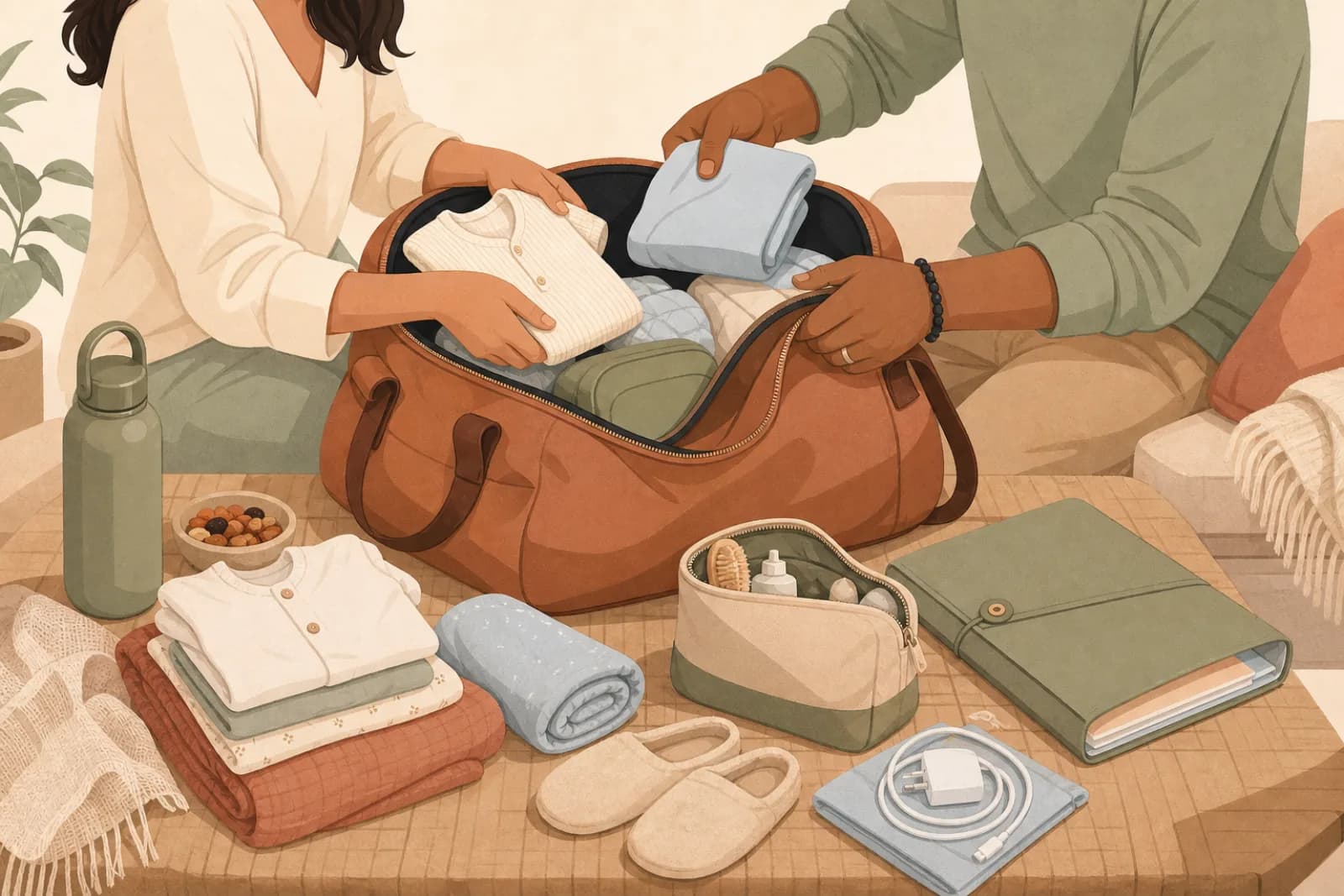
A useful hospital bag covers four moments: arrival, labor, recovery and the journey home. The essentials are documents required by your facility, prescribed medicines, comfortable clothing and toiletries, postpartum basics, a few baby items, phone power and a safe travel plan.
Everything else is optional until your hospital, birth center or maternity team says otherwise. Facilities provide different supplies, stays vary, climates differ, and a planned caesarean may need a different setup from an uncomplicated vaginal birth.
Use the free Egspect hospital bag checklist to create a practical list, or browse all pregnancy and baby tools.
Medical note: This checklist is general information, not medical advice. Ask your maternity facility what to bring, when to arrive and which medicines or feeding supplies are permitted. Seek care according to your team's labor and emergency instructions.
TL;DR: what belongs in the bag?
| Pack for | Essentials | Useful extras |
|---|---|---|
| Arrival | ID, health or insurance information, maternity records, birth preferences, medicines | Printed contact list, pen, folder |
| Labor | Loose clothes, water bottle if allowed, lip balm, hair ties, comfort items | Fan, music, massage tool, long charging cable |
| Recovery | Toiletries, maternity pads, comfortable underwear, feeding-friendly clothes | Eye mask, pillowcase, shower sandals |
| Baby | Diapers if required, bodysuits, sleepsuits, hat, blanket, going-home outfit | Muslins, spare small bag |
| Partner | ID, medicines, clothes, toiletries, charger, snacks | Pillow, swimwear if using a birth pool |
| Going home | Weather-ready clothes and an appropriate child restraint if travelling by car | Bag for laundry, payment or transport details |
The NHS hospital bag guidance suggests packing at least three weeks before the due date and provides separate lists for the birthing parent, baby and partner. Treat it as a starting point, then localize it.
When should you pack a hospital bag?
Aim to have a basic bag ready several weeks before the estimated due date. Packing earlier may make sense if your care team expects a planned admission, twins or multiples, a scheduled caesarean, travel to a distant facility, or another reason birth could occur earlier.
Do not make “finished” mean “perfect.” Pack the essentials first. Keep a short last-minute list on top for the phone, charger, glasses and daily medicines.
If you are planning a home birth, a transfer bag can still be useful. Your midwife or local team can explain what records and items should be ready if plans change.
What should the birthing parent pack for arrival?
Start with the items that make admission and safe care easier:
- photo identification if required;
- health, insurance or payment details used in your country;
- maternity notes, test results or referral documents the facility does not hold digitally;
- birth preferences or plan, understanding that clinical needs can change it;
- a complete list of medicines and allergies; and
- prescribed medicines in original packaging unless your facility says otherwise.
Do not decant pills into an unlabelled container. Tell the clinical team what you have taken. Hospitals may manage medicines during admission even when you brought your own.
Save important phone numbers offline: the maternity assessment line, hospital entrance, transport, backup support and childcare contact. Phone batteries fail at inconvenient times.
What clothing is actually useful during labor?
Choose clothes that are loose, breathable, easy to remove and acceptable to get stained. A large T-shirt, nightdress or the facility gown may be enough. Bring socks and footwear suitable for walking and showering.
Comfort items are personal. Useful options include:
- hair ties or a headband;
- lip balm;
- a refillable water bottle if drinking is permitted;
- glasses and their case;
- a fan or water spray;
- headphones and a short playlist;
- a TENS machine only if chosen and approved, with batteries; and
- a familiar pillow in a distinctive washable case.
A huge “labor entertainment” collection usually stays untouched. One calming option is enough.
What supports recovery after birth?
Pack for comfort, bleeding, feeding choices and a body that will not immediately return to its pre-pregnancy shape.
The core recovery set is:
- high-waisted, soft or disposable underwear;
- absorbent maternity pads as advised locally;
- two or three loose changes of clothes;
- a front-opening nightdress or top if useful for feeding or skin-to-skin;
- a comfortable bra if wanted;
- toothbrush, toothpaste, soap, deodorant and hairbrush;
- towel only if the facility does not provide one; and
- a bag for wet or dirty clothing.
For a planned caesarean, ask the care team about clothing that sits above the incision, expected length of stay, mobility and wound-care needs. Do not buy wound products without clinical advice.
Pack the clothes that fit late in pregnancy for going home. Recovery needs softness and room, not a “bounce back” outfit.
What does the baby really need?
Newborns need warmth, diapers, a few simple clothes and safe travel—not a full nursery in a suitcase.
Pack according to weather and expected stay:
- a few bodysuits or vests;
- a few sleepsuits;
- a hat if advised for the setting or weather;
- socks or booties if the clothing does not cover feet;
- diapers and wipes or cotton wool if not provided;
- muslin cloths;
- a light blanket or warmer layer suited to climate; and
- one going-home outfit in newborn size plus one larger option if desired.
Avoid bulky coats under a car-seat harness. Follow the child-restraint manufacturer and local road-safety guidance. If travelling by car, install the appropriate seat before labor and practice tightening it correctly.
Hospitals differ on baby bathing products, diapers and formula. Ask before packing. If formula feeding is planned or may be needed, the facility should explain what it provides and what sealed products are acceptable. Infection-control procedures matter, so improvising equipment is not a good backup plan.
What should a dad or birth partner pack?
The partner's bag should help them stay present without becoming another person the patient has to organize.
Bring:
- required ID or visitor information;
- personal medicines;
- comfortable clothes and a warm layer;
- toothbrush, deodorant and basic toiletries;
- phone, extra-long cable and power bank;
- food and drinks permitted by the facility;
- glasses or contact-lens supplies; and
- payment, parking or transport details.
Add swimwear if the partner may enter a birth pool and the facility allows it. Pack a separate change of clothes for after birth.
The most important preparation is not in the bag: know the route, the clinical contact number, the birth preferences, current medicines, and where every item is packed. Read the pregnancy guide for fathers and partners for a trimester-by-trimester role.
What can stay at home?
Most families can skip:
- multiple bags of newborn fashion;
- valuables and expensive jewelry;
- scented products that may irritate or conflict with facility policy;
- candles or open-flame items;
- large speakers;
- medicines or supplements not approved by the clinical team;
- a breast pump unless the facility requests it; and
- large quantities of diapers or postpartum products before confirming what is supplied.
Marketing lists often treat uncertainty as a shopping opportunity. Ask one question before buying: What problem will this solve during this specific stay?
How should you organize the bag?
Use three sections or packing cubes:
- Labor now: documents, medicines, labor clothes and immediate comforts.
- After birth: recovery clothing, toiletries and baby basics.
- Going home: parent outfit, baby outfit and weather layer.
Label each section clearly. Put the baby outfit and first diaper together. Keep records and medicines easy to reach rather than under clothes.
A separate small partner bag prevents constant searching. Leave extra supplies at home in a visible “bring later” bag that another person can collect if the stay extends.
What should you confirm with the hospital?
Call, check the official website or ask at an appointment:
- Which entrance is open outside normal hours?
- Which documents and records are required?
- What clothes, pads, diapers and toiletries are provided?
- What food and drink can patients and partners bring?
- Can partners stay overnight, and what do they need?
- What is the policy on photos, birth pools, electrical items and personal pillows?
- What feeding supplies are provided or permitted?
- What transport or car-seat rules apply for discharge?
- How should you prepare for a planned caesarean or induction?
Facility answers outrank any universal online checklist.
What should you do this week?
- Open the hospital bag checklist tool.
- Confirm the facility's own list and expected stay.
- Pack documents, medicines and basic clothes first.
- Install or arrange the baby's safe way home.
- Put last-minute items on a note attached to the bag.
- Have the birth partner unpack and repack it once so they know the layout.
- Place the bag where it can be reached without blocking daily life.
Take one photo of the packed sections and share it with the support person who may bring extra supplies later. If plans involve more than one possible birth facility, keep the universal essentials together and make a small facility-specific note for documents, entrance details and items provided on site. That keeps a late change from becoming a full repack.
Related reading and tools
- Free hospital bag checklist
- Labor signs checker
- Contraction timer
- Pregnancy warning signs
- Complete newborn care guide
- Pregnancy week calculator
- Pregnancy week-by-week trimester guide
- Pregnancy guide for fathers and partners
- How doctors calculate a due date
- NHS: hospital bag checklist
- NHS: preparing for labour and birth
Facility guidance was reviewed and accurate as of July 29, 2026. Confirm current requirements directly with the place where you plan to give birth.
Frequently asked questions
When should I pack my hospital bag?
A practical target is to have the bag ready a few weeks before the due date. The NHS suggests at least three weeks ahead, but your maternity team may advise earlier for multiple pregnancy, planned admission or higher risk.
What are the true hospital bag essentials?
Bring identification and maternity records required locally, prescribed medicines, comfortable clothes, toiletries, maternity pads, phone and charger, baby clothing and diapers, and an appropriate way to travel home. Confirm what your facility provides.
How many baby outfits should I pack?
Pack a small number of season-appropriate bodysuits and sleepsuits plus a going-home outfit, then adjust for the expected stay and facility guidance. A few correctly sized basics are more useful than a large wardrobe.
Does the birth partner need a separate bag?
A small separate bag is useful for identification, medicines, comfortable clothes, toiletries, phone charging, snacks and any items the facility requests. The partner should know where everything is in all bags.
Should I bring formula or feeding equipment?
Ask the birth facility before packing feeding supplies because policies and available support differ. Follow local clinical and infection-control guidance rather than bringing powdered formula or sterilizing equipment by assumption.
Egspect keeps pregnancy weeks, baby milestones and shared family logs ready without making the day feel like a medical dashboard.
Create my family space